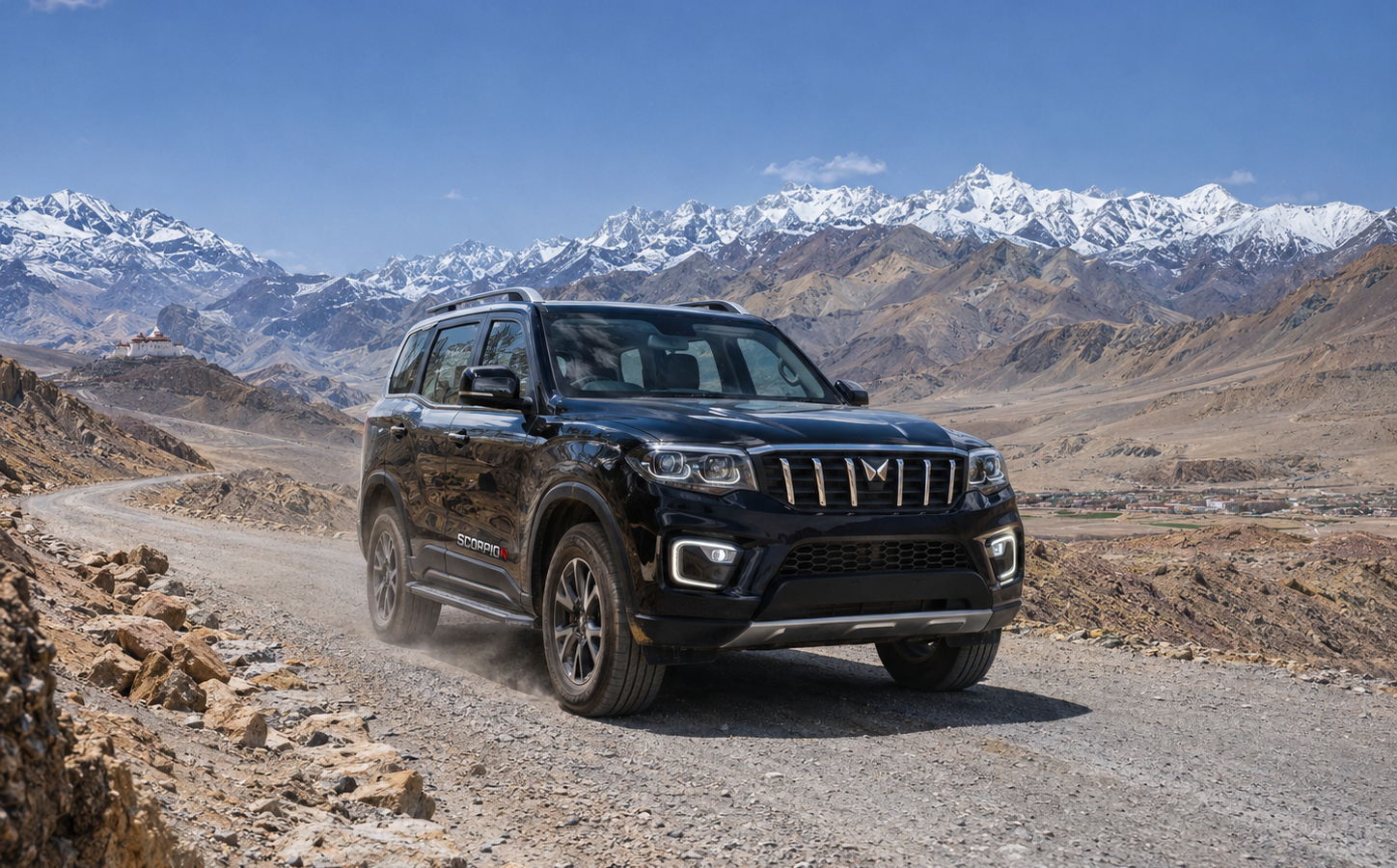

Route, distance and time
A road trip to Ladakh from Bangalore by car is a long haul, not a weekend escape. Expect roughly 3,400–3,600 km one way, depending on whether you approach Ladakh via Manali or Srinagar and how many detours you add. Most well-paced drives take 10–14 days one way, with shorter runs possible if you push hard and skip acclimatization days — which we do not recommend.
State transitions on the classic route run Karnataka → Maharashtra → Madhya Pradesh → Uttar Pradesh → Delhi → Haryana → Punjab → Himachal Pradesh → Jammu & Kashmir → Ladakh. The two main gateways are Manali (Himachal Pradesh) and Srinagar (Jammu & Kashmir). The Manali–Leh highway is typically open only in summer because of snow; check current road status before committing.
Key stops along the way
From Bangalore, a sensible northbound spine is Bangalore → Hyderabad → Nagpur → Bhopal or Jhansi → Delhi → Chandigarh → Manali. From Manali, the climb runs through Rohtang or Atal Tunnel, Jispa, Darcha, Sarchu, Pang and Tanglang La before Leh. The Srinagar side runs Srinagar → Sonamarg → Drass → Kargil → Mulbekh → Lamayuru → Leh, with the option of branching to Nubra and Pangong later.
Build rest stops at Leh before tackling high passes such as Khardung La, Chang La or Tanglang La. Acclimatization is not optional at these altitudes.
Vehicle preparation
Use a reliable SUV or a well-maintained car with high clearance. Before leaving Bangalore, service the vehicle, check brakes, coolant, belts, tyres including the spare, battery health, and all lights. Carry a tyre repair kit, portable compressor, jump cables, tow strap, basic tools, engine oil, coolant, and spare fuses. Snow chains are useful on the Manali side early or late in the season; check conditions and local advice.
Fuel stops become sparse above Manali and Srinagar. Fill up whenever you can and carry a jerrycan only if it is legal and safe for your vehicle. Diesel and petrol are available in Leh and major towns, but not on every pass.
Permits and paperwork
Inner Line Permits (ILP) are required for areas such as Nubra Valley, Pangong Tso, Hanle and Tso Moriri. Rules and issuing offices can change, so confirm at the time of travel through the Ladakh administration or a registered local operator. Carry multiple photocopies of your driving licence, RC, insurance, PUC, and ID. Keep digital backups.
Acclimatization and altitude safety
Altitude sickness can affect anyone regardless of fitness. Ascend slowly, take a rest day at Leh before going higher, drink water, avoid alcohol for the first days, and watch for headache, nausea, dizziness, breathlessness and confusion. If symptoms worsen, descend. Carry a basic medical kit and any personal medication; consult a doctor about acetazolamide or other options before you travel. Travel insurance that covers high-altitude evacuation is worth considering.
Best time to travel
The usual window is late May to September, when the Manali–Leh road is generally open and the passes are clearer of snow. July and August bring monsoon rain and landslide risk on the Himachal side. The Srinagar route is often more reliable in early summer. Avoid winter unless you have serious high-altitude driving experience and the right vehicle.
Budget estimates
Costs vary widely with vehicle, fuel prices, accommodation and duration. For a compact SUV, fuel for a 7,000 km round trip is a major line item. Add tolls, permits, insurance, meals, stays and a buffer for repairs or weather delays. Budget conservatively: this is not a shoestring route, and a breakdown or forced halt can add days and cost. Build a contingency of at least 20–25%.
Road conditions, fuel, medical and connectivity
Highway sections are generally good; mountain roads are slow, narrow and exposed. Expect gravel, water crossings, landslide debris and traffic delays. Drive in daylight where possible, give way on single-lane stretches, and never attempt a pass in bad weather. Fuel is reliable in towns but not between them; plan fill-ups. Medical facilities are limited outside Leh and Srinagar, so carry a first-aid kit and know the nearest hospital. Mobile connectivity is patchy; download offline maps and consider a satellite messenger if you travel solo or off the main routes.
Day-by-day outline
Day 1–3: Bangalore to Nagpur and Delhi. Day 4–5: Delhi to Manali. Day 6–8: Manali to Leh via Jispa and Sarchu with an overnight buffer. Day 9–10: Rest and acclimatize in Leh. Day 11–13: Nubra and Pangong with permits. Day 14–15: Return via Srinagar or back down the Manali road. This is a workable outline, not a fixed schedule — build in weather days.
Checklist before you go
Service vehicle; check tyres, brakes, battery, coolant and lights. Carry documents and photocopies. Confirm permits and current road status. Book stays in Leh and key stops. Pack warm layers, sun protection, first-aid kit, medicines after medical advice, offline maps and a power bank. Carry water, snacks and cash. Share your itinerary with someone at home and check in regularly. Drive slowly, take rest days, and turn back if conditions or health say so.