
A Ladakh motorcycle trip can start in Manali or Leh, but those choices come with different costs, logistics and riding plans. Rental rates and local rules can change, so treat quoted prices as a starting point: confirm the full terms with the rental operator and relevant local authorities before you travel.
Which motorcycle should you rent?
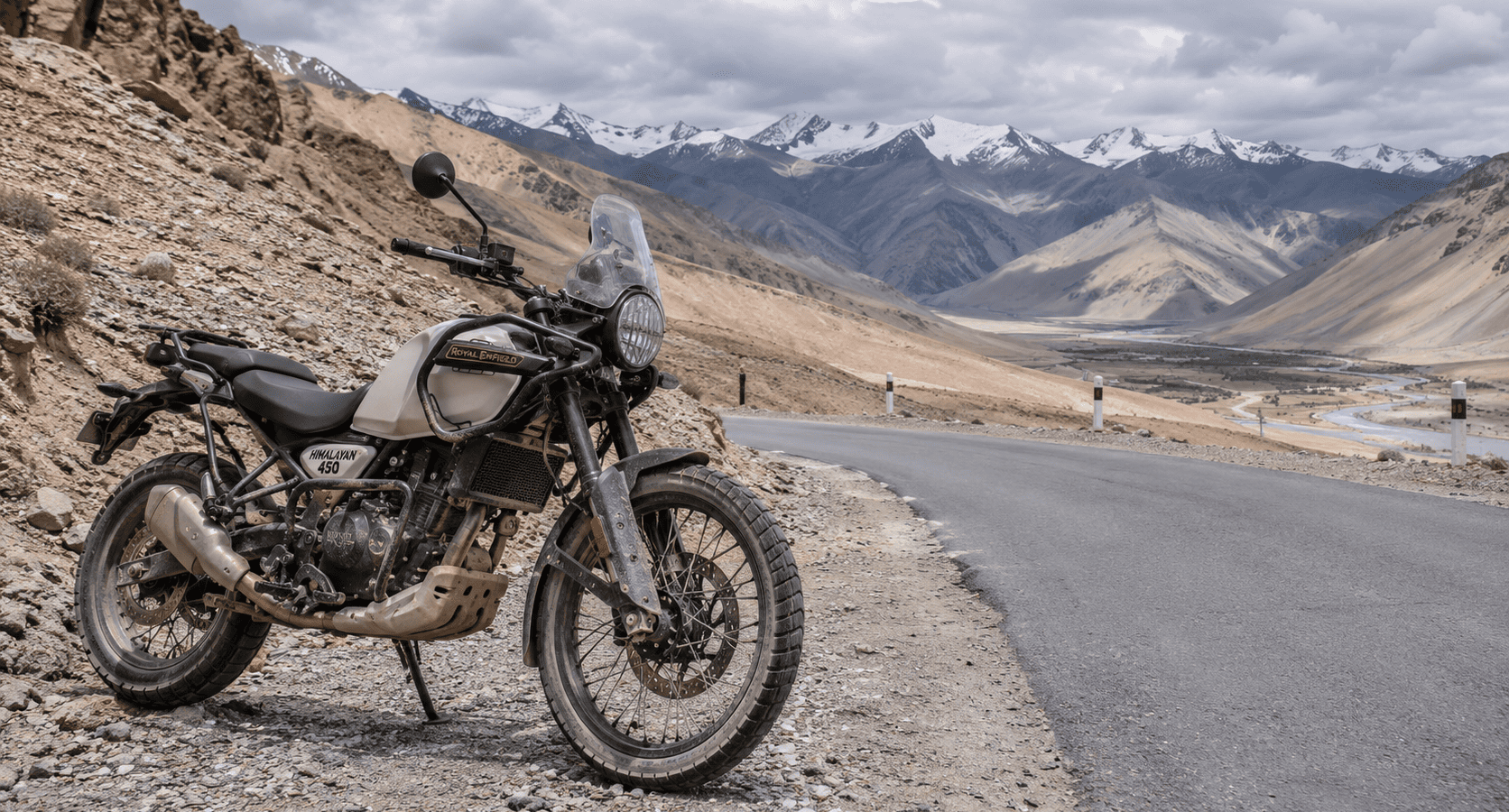
The Royal Enfield Himalayan 411 is a common middleweight choice for a loaded trip. It is a straightforward option for riders who want an upright riding position and a motorcycle intended for mixed road conditions. The newer Himalayan 450 is another option where available, but confirm the exact model, condition and rental terms rather than assuming every operator has one.
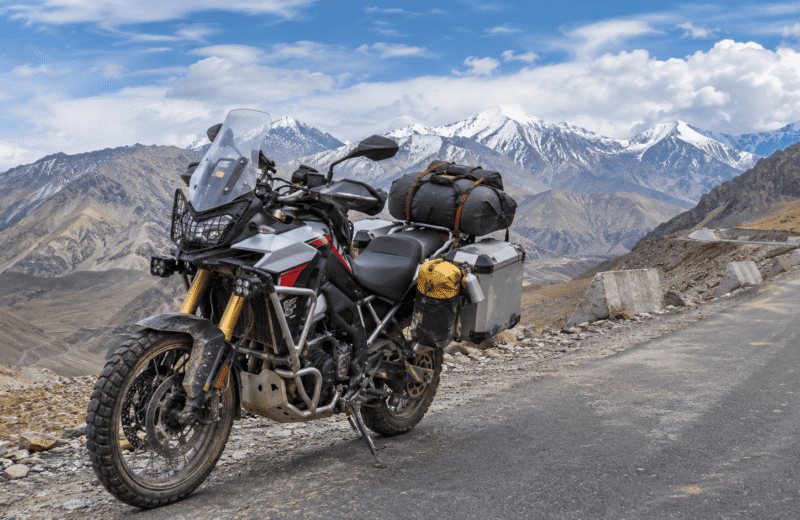
A Royal Enfield Classic 350 may suit a rider prioritising a familiar, relatively simple-feeling road bike over a more adventure-focused model. It can be a less expensive rental, but consider your luggage, passenger and route when deciding whether it suits your trip. The KTM 390 Adventure is an option for riders who prefer a more performance-oriented adventure motorcycle; ask about the specific model year and equipment supplied.
Do not choose on model name alone. A well-maintained motorcycle with sound tyres, working brakes and a reliable luggage setup is a better prospect than a more desirable model in poor condition. If you are new to mountain riding, be realistic about your experience, the weight of your loaded bike and your ability to manage it at low speeds.
Indicative daily rental rates
The figures below are approximate planning ranges supplied for this guide, not verified live quotes. In Manali, a Himalayan 411 is quoted at about ₹900–1,200 per day and a Classic 350 at about ₹700–900. In Leh, a Himalayan is quoted at about ₹800–1,100 per day. No comparable rate was supplied for the Himalayan 450 or KTM 390 Adventure, so request a current written quote.
Ask what the daily charge includes, how the operator counts rental days, and whether there are extra charges for luggage, late return, damage or roadside support. Confirm whether the quoted amount is per calendar day or a 24-hour period. Get the agreed model, dates, deposit and return location recorded in writing before paying.
Manali or Leh: which is better?
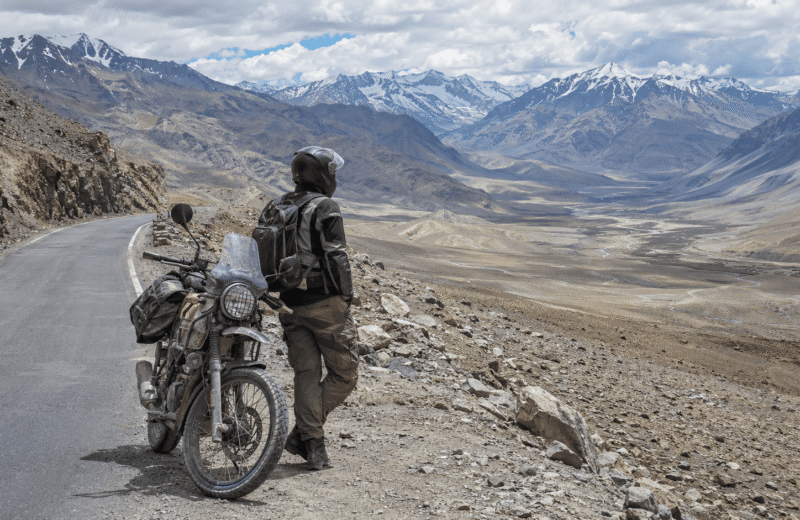
Renting in Manali can make sense if your itinerary begins there and you want to ride into Ladakh. It avoids arranging a separate transfer to Leh before starting the ride. The trade-off is that a Manali rental may involve a demanding approach route and a longer overall rental period. Build time into the plan for acclimatisation, weather and road delays rather than treating the schedule as fixed.
Renting in Leh means you can reach the region first and begin the motorcycle portion there. That can reduce the distance you ride on the rental, depending on your route, but you still need to organise your journey to Leh. Confirm which areas the rental company permits you to visit and whether its agreement allows the planned circuit.
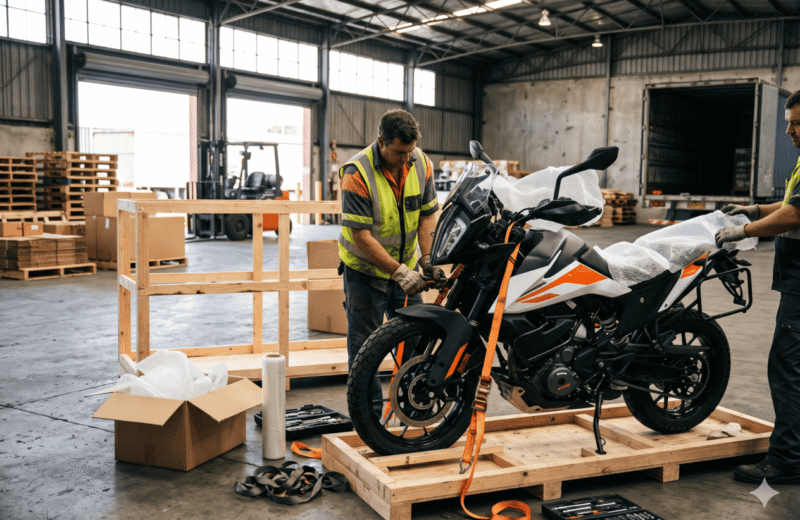
A one-way rental is not automatically cheaper just because it saves backtracking. Ask whether the operator allows a different return city, what the drop-off or recovery charge is, and whether that charge changes with the route or season. A round trip may have a higher day count but avoid a one-way fee. Compare the complete cost—rental days, drop-off, fuel, transport and any unused days—before choosing.
Deposits, insurance and paperwork
Rental operators may ask for a refundable security deposit and identity or driving documents. The deposit amount and refund conditions were not provided for this guide, so confirm them directly. Ask what deductions can be made, how damage is assessed, when the balance is returned and whether you will receive a written inspection record.
Do not assume the motorcycle’s insurance covers every loss, damage claim or rider liability. Ask to see the applicable policy or proof of cover and clarify what it excludes, including damage to the rented motorcycle, theft, riding outside permitted areas and any excess payable after a claim. Confirm that your licence is valid for the motorcycle class and that you meet the operator’s requirements. A rental agreement is not a substitute for checking insurance terms.
Local-bike restrictions: verify before planning Nubra or Pangong
A commonly cited restriction says that non-local or outside-registered motorcycles may not be accepted for some sightseeing trips from Leh, including routes to Nubra Valley and Pangong Tso, while locally registered rental bikes are used instead. This rule was not supported by retrieved evidence for this article and may be subject to current local directions or route-specific conditions. Before booking, ask the rental operator and check with the relevant local authority or official tourism information. Get confirmation for your exact registration, destination and date; do not rely on hearsay or assume a Leh pickup alone makes a bike eligible.
If a restriction applies to your bike, ask what lawful alternatives are available and what each costs. Do not plan to evade a checkpoint or misrepresent the motorcycle’s registration. Confirm whether the restriction affects the whole circuit or only particular excursions, and check again shortly before departure in case guidance changes.
How to avoid union-rate surprises
Ask for the total price, not just the advertised daily rate. Confirm whether the quote follows a local association or union rate, whether that rate is mandatory for your rental, and which services it covers. If you are told that a local rule or fee applies, request the amount, the reason and any written notice or receipt. Compare quotes on the same basis: model, dates, deposit, permitted route, return location and included support.
Do not hand over the full payment until you have inspected the bike and read the agreement. Keep receipts, photographs and the operator’s contact details. If a charge appears after pickup, compare it with the written terms and ask for an itemised explanation before agreeing to pay.
Motorcycle pickup checklist
Walk around the motorcycle with the rental representative and photograph each side, existing scratches, controls, tyres and odometer. Record the fuel level and any damage on the handover sheet. Check that the registration, insurance and other required documents are present and that the registration details match the motorcycle.
- Test the front and rear brakes and check for obvious leaks or warning lights.
- Inspect tyres for visible damage and usable tread; check pressures if you have a gauge.
- Check the chain condition and tension, lights, indicators, horn, mirrors and throttle return.
- Confirm the clutch engages smoothly and the motorcycle starts reliably.
- Check that luggage mounts are secure and do not interfere with steering, suspension or exhaust.
- Confirm the supplied toolkit, spare tube or puncture equipment, and breakdown contact arrangements.
- Take a short test ride nearby and report any fault before leaving.
If a safety-critical issue cannot be fixed, ask for another motorcycle or do not ride away. Agree in writing who to contact if the bike breaks down, what repairs you may authorise and how a replacement is handled. Keep your route flexible, carry appropriate riding gear and check current road and weather conditions before each leg.
Bottom line
Choose Manali if starting there fits your itinerary and the operator confirms the route and return terms. Choose Leh if you want to begin the ride after reaching the region and can verify that your rental is permitted for the places you plan to visit. In either case, compare full trip costs, confirm local access rules directly, read the insurance terms and document the motorcycle’s condition before setting off.